Managing finances is one of the biggest challenges for small business owners. Imagine running a growing business, handling invoices, tracking expenses, and managing tax compliance—all manually. Errors pile up, stress increases, and financial mismanagement can stifle growth. Now, picture an automated system that handles all of this seamlessly, giving you more time to focus on expanding your business. This article explores the best accounting software solutions tailored for small businesses in 2025.
Why Small Businesses Need Accounting Software
Accounting software is crucial for small businesses because it:
- Automates financial processes: Reduces manual errors and saves time.
- Enhances financial visibility: Provides real-time insights into cash flow.
- Simplifies tax compliance: Helps businesses track deductions and generate tax reports.
- Improves invoicing and payments: Ensures timely billing and payment tracking.
- Scales with your business: Allows flexibility for growing financial needs.
Top Accounting Software for Small Businesses
| Software | Best For | Key Features |
|---|---|---|
| QuickBooks | Overall accounting | Automated invoicing, expense tracking, financial reports |
| Xero | Cloud-based solutions | Multi-currency support, bank reconciliation, mobile access |
| FreshBooks | Freelancers & small teams | Custom invoicing, time tracking, payment processing |
| Wave | Free accounting | Free invoicing, receipt scanning, payroll integration |
| Zoho Books | Budget-friendly | GST/VAT compliance, multi-user collaboration, automation |
In-Depth Analysis of Each Software
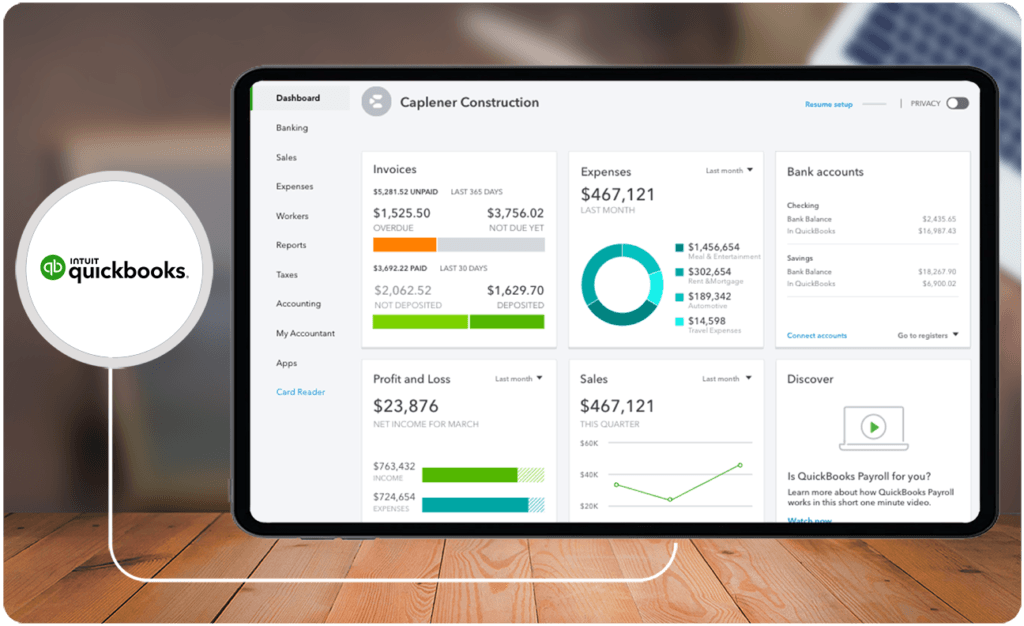
1. QuickBooks – Best for Overall Accounting
QuickBooks is one of the most trusted accounting software for small businesses. It provides comprehensive financial tracking, tax preparation, and automation.
- Pricing: Starts at $25/month.
- User-Friendliness: Easy to use, even for beginners.
- Integration: Connects with banking, payroll, and third-party apps.
2. Xero – Best for Cloud-Based Solutions
Xero is designed for small businesses that need access to accounting data anytime, anywhere.
- Pricing: Starts at $13/month.
- Cloud Access: Real-time access on desktop and mobile.
- Multi-Currency Support: Ideal for businesses with international transactions.
3. FreshBooks – Best for Freelancers & Small Teams
FreshBooks simplifies accounting for solo entrepreneurs and small teams with a focus on invoicing and payments.
- Pricing: Starts at $17/month.
- Time Tracking: Bill clients based on tracked hours.
- Automation: Automates invoicing and late payment reminders.
4. Wave – Best Free Accounting Software
Wave offers a free accounting platform with essential features for small businesses on a budget.
- Pricing: Free for accounting and invoicing; optional payroll services.
- Ease of Use: Simple setup with no learning curve.
- Essential Features: Includes invoicing, expense tracking, and receipt scanning.
5. Zoho Books – Best for Budget-Friendly Accounting
Zoho Books is an affordable alternative that provides full-featured accounting solutions for small businesses.
- Pricing: Starts at $15/month.
- Compliance: Supports VAT, GST, and sales tax calculations.
- Automation: Reduces manual accounting tasks.
How to Choose the Right Accounting Software
When selecting accounting software, consider these factors:
- Business Size: Choose software that fits your business needs and growth plans.
- Features: Ensure it includes invoicing, tax tracking, and reporting tools.
- Ease of Use: A user-friendly interface minimizes learning time.
- Integration: Compatibility with payroll, banking, and CRM tools.
- Pricing: Balance affordability with necessary features.
Future Trends in Accounting Software
- AI-Driven Automation: AI-powered financial analytics and smart invoicing.
- Blockchain Security: Enhanced security for financial transactions.
- Mobile-First Accounting: More businesses will rely on mobile-friendly apps.
- Tax Law Integration: Software adapting to changing tax regulations.
Conclusion
Choosing the right accounting software is crucial for financial stability and growth. The best accounting tools automate tedious tasks, provide financial insights, and ensure compliance with tax laws. By investing in the right solution, small businesses can improve efficiency, reduce errors, and scale successfully in 2025.