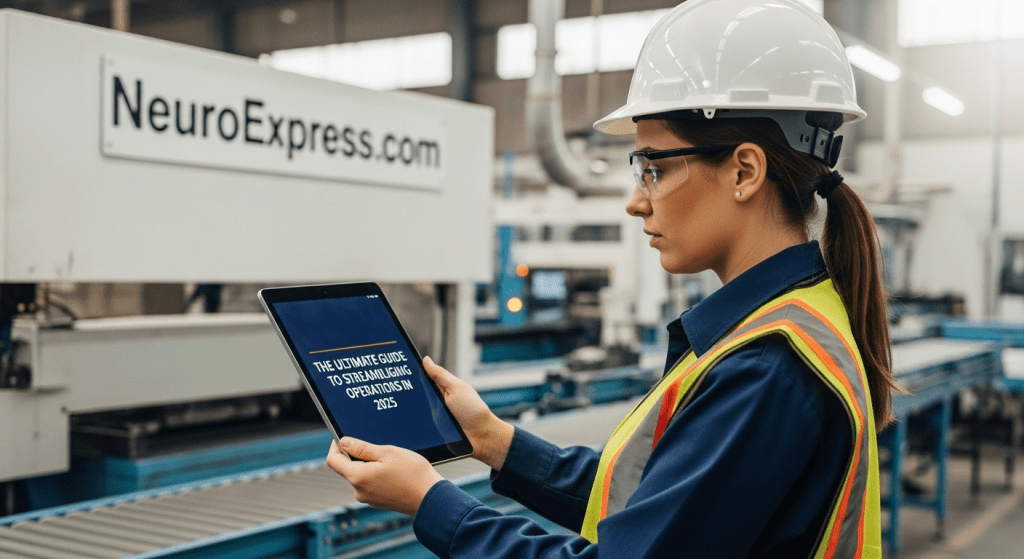
ERP for Manufacturing: The Ultimate Guide to Streamlining Operations in 2025
Introduction
In today’s fast-paced industrial landscape, efficiency is everything. ERP for manufacturing has become the backbone of modern factories, helping businesses streamline operations, reduce costs, and gain real-time visibility across supply chains. As we step into 2026, manufacturers face increasing pressure from global competition, sustainability goals, and Industry 4.0 transformations.
In this guide, NeuroXpress explores how ERP systems empower manufacturing companies to optimize processes, from production scheduling to inventory control. Whether you’re running a small factory or a large-scale industrial operation, choosing the right ERP can significantly impact profitability.
What is ERP for Manufacturing?
ERP (Enterprise Resource Planning) in manufacturing integrates core processes into a centralized system. It connects departments such as:
-
Production – scheduling, quality control, and shop floor tracking.
-
Supply Chain Management – procurement, logistics, and vendor collaboration.
-
Finance & Accounting – budgeting, cost control, and profitability tracking.
-
Human Resources – workforce planning and labor management.
Unlike traditional ERP systems, modern ERP for manufacturing leverages AI, IoT, and real-time analytics, giving decision-makers powerful insights.
Why Manufacturers Need ERP in 2026
The manufacturing sector is evolving rapidly, and ERP adoption is no longer optional. Key benefits include:
-
Operational Efficiency – automate repetitive tasks, reduce manual errors.
-
Smart Inventory Management – maintain optimal stock levels with real-time visibility.
-
Cost Reduction – track expenses at every stage of production.
-
Enhanced Collaboration – unify departments and improve communication.
-
Data-Driven Decisions – access predictive analytics for production planning.
-
Regulatory Compliance – meet industry standards with accurate reporting.
Top ERP Features for Manufacturing in 2026
When evaluating ERP solutions, manufacturers should focus on these must-have features:
-
Production Planning & Scheduling
-
Bill of Materials (BOM) Management
-
Shop Floor Control & IoT Integration
-
Inventory & Warehouse Automation
-
Quality Control & Compliance
-
Real-Time Analytics & AI Forecasting
-
Cloud & Mobile Accessibility
Best ERP Software for Manufacturing in 2026
Here are the top 10 ERP solutions for manufacturing in 2026:
| ERP Software | Best For | Key Features | Pricing Model | Rating (2026) |
|---|---|---|---|---|
| SAP S/4HANA | Large enterprises | AI-driven planning, IoT integration | Quote-based | ⭐⭐⭐⭐⭐ |
| Oracle NetSuite | Global manufacturing operations | Multi-plant management, analytics | Subscription | ⭐⭐⭐⭐⭐ |
| Microsoft Dynamics 365 | Mid to large manufacturers | Real-time reporting, SCM integration | Subscription | ⭐⭐⭐⭐☆ |
| Infor CloudSuite | Process manufacturing | Cloud-native, compliance tools | Quote-based | ⭐⭐⭐⭐☆ |
| Epicor Kinetic | SMBs in manufacturing | Shop floor control, automation | Subscription | ⭐⭐⭐⭐☆ |
| Odoo Manufacturing | Small manufacturers | Open-source, affordable | Free/Paid | ⭐⭐⭐⭐☆ |
| Syspro ERP | Discrete manufacturers | BOM, IoT integration | Quote-based | ⭐⭐⭐⭐☆ |
| Plex Smart ERP | Cloud manufacturing | Quality control, analytics | Subscription | ⭐⭐⭐⭐☆ |
| IQMS (DELMIAWorks) | Automotive & plastics industry | MES, real-time monitoring | Quote-based | ⭐⭐⭐⭐☆ |
| Priority ERP | Growing businesses | Mobile-first ERP, BI tools | Subscription | ⭐⭐⭐⭐☆ |
How to Choose the Right ERP for Manufacturing
When selecting ERP software, consider these factors:
-
Scalability – can it grow with your business?
-
Customization – does it fit your unique processes?
-
User-Friendliness – will your team adapt quickly?
-
Integration – is it compatible with your current tools?
-
Cost – is the ROI worth the investment?
Future of ERP in Manufacturing (2026 and Beyond)
The future of manufacturing ERP is deeply tied to Industry 4.0 and AI-driven automation. By 2026, ERP systems will:
-
Integrate machine learning for predictive maintenance.
-
Use IoT sensors for real-time shop floor tracking.
-
Offer green compliance modules to support sustainability.
-
Deliver cloud-first solutions for mobile-first manufacturing.
Conclusion
ERP for manufacturing in 2026 is no longer just an operational tool—it’s a competitive advantage. By adopting the right system, manufacturers can streamline workflows, optimize costs, and unlock smarter decision-making.
For more in-depth reviews, explore our dedicated ERP Software Reviews section at NeuroXpress. And for additional research, check resources like TechTarget for the latest ERP insights.