Driving the Future of Customer Relationships
Car dealership CRM played a pivotal role in transforming a once struggling car retailer in the competitive streets of Paris. The dealership faced a challenge all too common — too many leads, but too little structure.
Test drives, phone inquiries, and website form submissions poured in, creating a wave of disorganized data.
Spreadsheets overflowed, follow-ups slipped through the cracks, and opportunities were missed. E
verything changed when the business adopted a smarter CRM system that redefined its operations from the ground up.
A modern CRM solution is far more than a digital contact list. It’s an intelligent platform that streamlines communication, centralizes customer information, and enhances every interaction throughout the buyer’s journey.
For European dealerships navigating tight margins, demanding clients, and evolving compliance standards, selecting the right system can mean the difference between consistent growth and missed potential.
Beyond boosting sales efficiency, implementing a CRM system helps cultivate lasting customer loyalty.
With real-time insights into customer preferences and service history, sales teams can deliver personalized, seamless, and trustworthy experiences.
The result? Stronger relationships, higher customer retention, and a lasting competitive edge in today’s fast-changing automotive market.
Why Every Dealership Needs a Car Dealership CRM in 2025
As Europe’s automotive industry undergoes digital transformation, a car dealership CRM has become a vital investment.
According to Statista’s 2025 European CRM Market Report, the adoption of automotive CRM solutions is expected to grow by over 13% annually, with more than 60% of dealerships planning system upgrades within two years.
The surge is driven by three major forces: the shift toward electric mobility, omnichannel sales, and data-driven marketing.
A car dealership CRM allows teams to unify these touchpoints, offering customers a seamless experience whether they’re exploring EV options online or visiting a physical showroom.
Moreover, CRM platforms help businesses remain GDPR-compliant while gathering valuable customer insights.
This balance of personalization and privacy is particularly important in European markets where consumers are highly conscious of data rights.
Through automation, analytics, and real-time lead tracking, dealerships can nurture relationships proactively rather than reactively.
Ultimately, a car dealership CRM transforms fragmented operations into one cohesive system where every department — from marketing to after-sales — works toward the same customer-centric goal.
Key Features to Look for in Automotive CRM Software
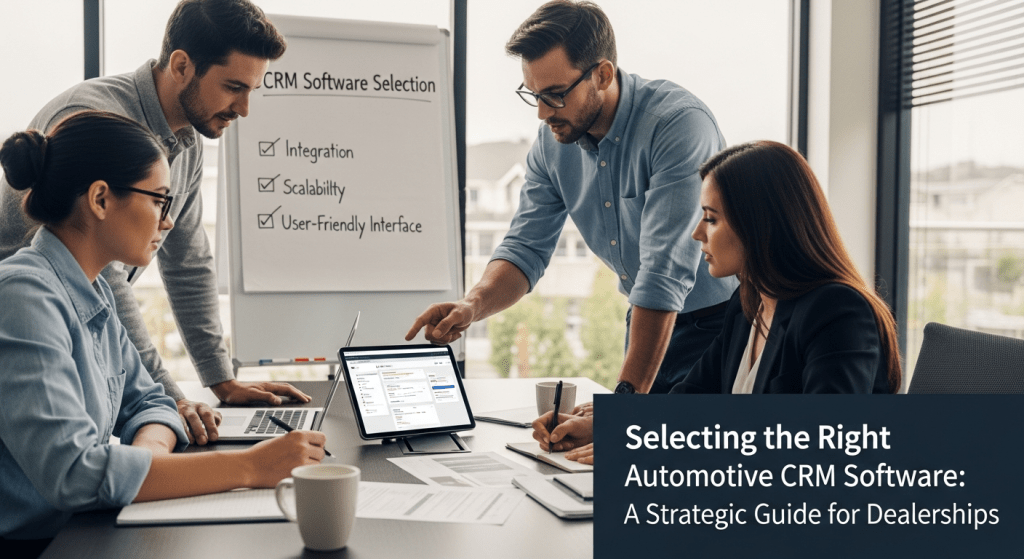
Choosing the right automotive CRM requires understanding what features truly matter. From AI-powered analytics to integration with dealer management systems (DMS), not all tools are created equal.
Below is a data-based comparison of popular CRM solutions in the European automotive market:
| CRM Platform | Key Features | Pricing (Monthly) | Pros | Cons | Avg. Rating | Source |
|---|---|---|---|---|---|---|
| HubSpot CRM | Contact management, email automation, analytics dashboard | €45–€79 | Scalable, intuitive | Limited auto templates | ⭐4.6/5 | G2 (2025) |
| Salesforce Automotive Cloud | Omnichannel sales, AI insights, service cloud integration | €120–€150 | Deep customization | Complex onboarding | ⭐4.7/5 | Capterra (2025) |
| DealerSocket | Inventory tracking, DMS sync, lead scoring | €95–€110 | Tailored for dealerships | Less flexible for small shops | ⭐4.4/5 | Vendor Site |
| VinSolutions | Lead nurturing, service scheduling, mobile app | €80–€100 | Great mobile access | Limited analytics | ⭐4.3/5 | G2 (2025) |
| AutoRaptor CRM | Text automation, sales reporting, task reminders | €70–€90 | Simple setup | Basic reporting | ⭐4.2/5 | Capterra (2025) |
(Data compiled from G2, Capterra, and vendor sites, 2025)
When comparing these systems, focus on scalability, user-friendliness, and integration potential. Although cost is a consideration, long-term ROI depends more on usability and team adoption than subscription price.
Car Dealership CRM Features That Drive Retention
Retention begins where sales end. A well-implemented car dealership CRM helps dealerships turn first-time buyers into lifelong clients.
By automating service reminders, offering personalized loyalty programs, and tracking satisfaction scores, these tools ensure consistent engagement long after the sale.
In Europe, where after-sales revenue contributes up to 45% of dealership profits, customer retention is critical.
With a car dealership CRM, service teams can identify high-value clients, schedule maintenance follow-ups automatically, and even trigger upsell campaigns for accessories or trade-ins.
These features not only boost sales but also create trust — a powerful differentiator in a market increasingly driven by digital relationships.
The Strategic Benefits of Implementing a Car Dealership CRM
Beyond operational convenience, the real power of CRM lies in its strategic value. Implementing a car dealership CRM offers dealerships several advantages that directly affect long-term performance:
-
Data Transparency: Every department has access to unified, real-time information.
-
Efficiency Gains: Automation eliminates repetitive tasks, allowing sales teams to focus on relationships.
-
Improved Marketing ROI: Targeted campaigns based on customer segments deliver better results.
-
Compliance and Security: Modern CRMs support GDPR requirements and advanced data protection.
-
Customer Insight: Analytics uncover trends, helping managers make data-backed decisions.
Because of these benefits, many European dealerships have shifted from basic management systems to full CRM ecosystems that integrate with marketing, finance, and even inventory tools.
Integrating CRM with Dealership Operations
At a dealership in Amsterdam, the management team realized that marketing campaigns weren’t translating into appointments. Their sales data was siloed, and customer insights were lost between departments.
By integrating their car dealership CRM with both their DMS and email automation platform, they finally created a 360-degree customer view.
The impact was immediate. Lead response time dropped by 40%, test drive bookings increased, and overall satisfaction ratings improved.
This success story highlights how integration transforms CRM from a standalone tool into a strategic hub.
Once data flows freely between marketing, sales, and service systems, collaboration improves, and the customer experience becomes truly seamless.
Additionally, linking CRM systems with payment gateways, loyalty apps, and website chatbots can provide dealerships with a competitive edge in responsiveness — a critical factor in Europe’s fast-paced auto retail environment.
Common Mistakes to Avoid When Choosing Automotive CRM
Even with so many benefits, not every dealership gets CRM implementation right. The most frequent pitfalls include:
-
Ignoring Team Input: Without consulting sales and service staff, adoption may fail.
-
Overlooking Integration: Choosing a system that doesn’t sync with existing tools leads to inefficiency.
-
Underestimating Training Needs: Employees need hands-on onboarding to use the system effectively.
-
Focusing Solely on Price: The cheapest option isn’t always the most cost-effective long-term.
-
Neglecting Data Hygiene: Poor data entry can undermine even the most advanced CRM features.
Avoiding these mistakes ensures a smoother transition and maximizes your return on investment.
Emerging Trends in Car Dealership CRM Systems
CRM technology continues to evolve rapidly across Europe. The following trends will shape how dealerships connect with customers in the next few years:
-
AI-Powered Insights: Predictive analytics forecast customer behavior and optimize marketing.
-
Voice and Chat Integration: Instant communication improves lead response times.
-
Sustainability Tracking: CRMs now help monitor eco-friendly initiatives tied to EV sales.
-
Enhanced Mobile Access: Field sales teams benefit from real-time updates anywhere.
-
Customer Data Platforms (CDPs): Integrations that merge online and offline data for unified insights.
Dealerships that embrace these advancements early will be better positioned to adapt to changing consumer expectations.
How to Select the Right Automotive CRM: A Step-by-Step Approach
Choosing the ideal CRM system doesn’t have to feel overwhelming. The following framework helps dealerships evaluate options strategically:
-
Identify Objectives: Define what problems your CRM must solve — lead management, retention, or marketing.
-
Assess Scalability: Choose a solution that can evolve with your growth.
-
Compare Vendors: Review user feedback, demos, and data security compliance.
-
Check Integration Capabilities: Ensure compatibility with ERP, DMS, and marketing tools.
-
Evaluate Support and Training: Reliable onboarding can make or break success.
Dealerships that invest time in this selection process are far more likely to achieve sustainable adoption and measurable ROI.
Conclusion: Building Loyalty Through Smart Technology
Selecting the right automotive CRM is not just about software; it’s about strategy. In Europe’s dynamic and data-driven automotive market, dealerships that use car dealership CRM solutions to understand, engage, and retain customers will outperform competitors who rely on manual methods.
A thoughtful CRM implementation leads to more meaningful conversations, stronger relationships, and better business outcomes.
When data, technology, and customer empathy align, loyalty naturally follows — and loyalty, in turn, drives lasting profitability.
To truly move from transactions to relationships, dealerships should view CRM as more than a tool — it’s the engine that keeps their business moving forward.