What Is ERP Software and Why It Matters
ERP software has become one of the most transformative technologies shaping how modern companies operate.
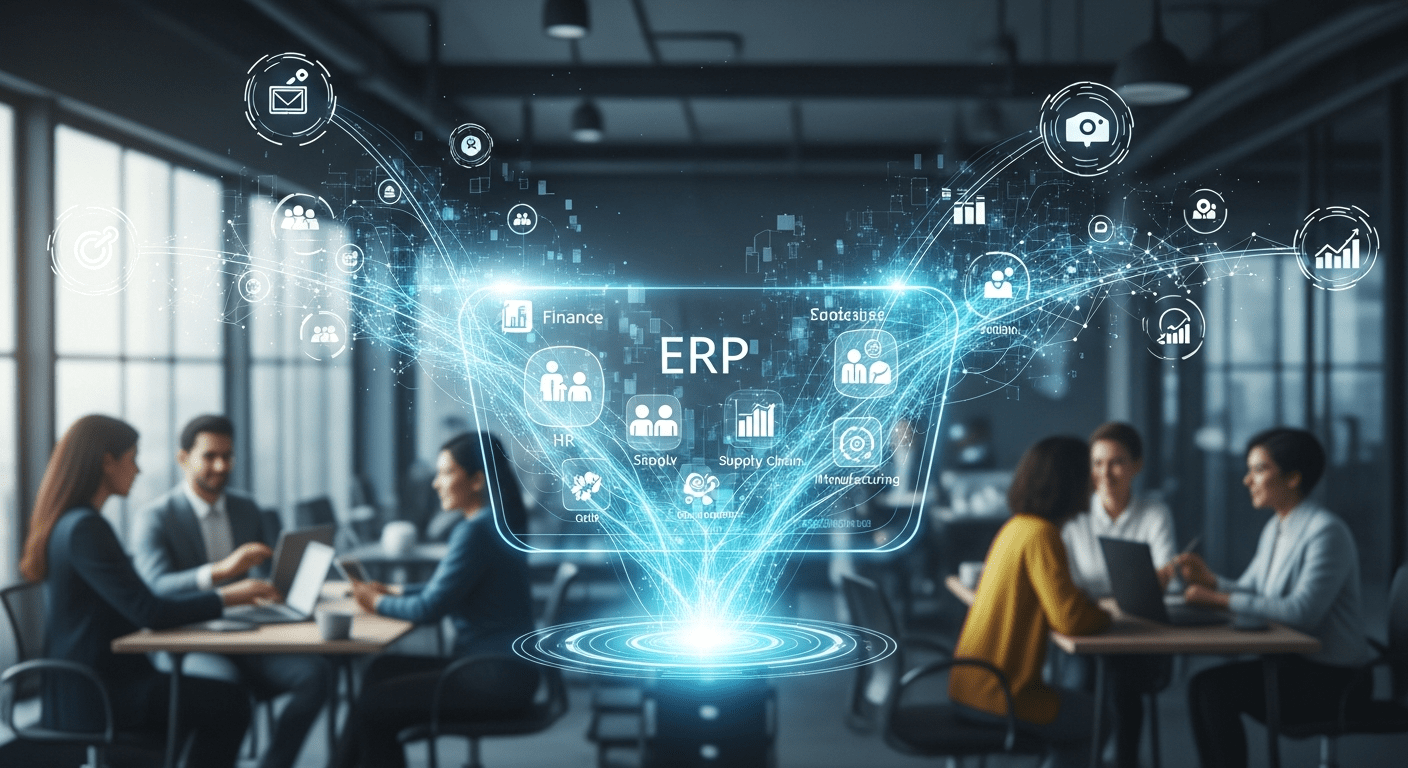
Imagine running a business where every department — from finance and HR to logistics and customer service — works seamlessly together.
Orders are processed quickly, reports update automatically, and managers can make data-driven decisions in real time. As a result, productivity rises and stress levels fall.
In essence, ERP (Enterprise Resource Planning) software serves as the central nervous system of a business.
It unites multiple functions within a single digital environment, ensuring that information flows smoothly across departments.
Moreover, this integration minimizes human error, boosts collaboration, and helps organizations respond to market changes faster.
In today’s competitive world, businesses of all sizes — from startups to multinational corporations — depend on ERP systems not only to survive but to scale efficiently.
Therefore, implementing ERP software is no longer an option; it’s a strategic necessity.
The Evolution of ERP Software: From Legacy Systems to Cloud Integration
In the early 1990s, ERP systems were complex, expensive, and limited to large corporations.
They ran on in-house servers, required lengthy installations, and demanded specialized maintenance. However, as technology evolved, so did the ERP concept.
The transition to cloud ERP software completely reshaped the industry. Instead of heavy infrastructure and costly upgrades, businesses gained access to scalable, subscription-based systems.
In addition, new ERP platforms became more user-friendly and customizable. Companies could now connect modules like accounting, inventory, and CRM without worrying about hardware.
For example, a manufacturing company that once relied on spreadsheets could now track materials, production, and delivery in real time using cloud ERP.
Consequently, operational efficiency increased while errors and delays dropped dramatically.
On top of that, the arrival of AI and automation has pushed ERP beyond simple management.
Modern ERP solutions analyze trends, predict outcomes, and even automate repetitive tasks. As a result, companies no longer react to problems — they anticipate them.
Core Features of Modern ERP Software
Modern ERP systems combine innovation with usability. In other words, they’re designed to make complex business operations easier and faster.
The following are some essential features that define today’s ERP platforms:
- Real-Time Data Management: Access live dashboards and analytics instantly.
- Automation Tools: Reduce manual work and human error through smart workflows.
- Cross-Module Integration: Sync accounting, HR, CRM, and supply chain data in one place.
- Scalability: Add or remove modules as your business grows.
- Mobile Accessibility: Manage operations anywhere through mobile-friendly dashboards.
- Security & Compliance: Protect sensitive data with encryption and global standards compliance (GDPR, ISO, SOC).
Moreover, these features empower leaders to make accurate, informed decisions while freeing employees from tedious administrative work.
In addition, the flexibility of ERP software means businesses can adapt faster to change — an essential trait in a volatile market.
The Tangible Benefits of ERP Software
The benefits of implementing ERP software extend far beyond streamlined operations. Therefore, more organizations are turning to ERP as a foundation for digital transformation.
- Better Decision-Making
Centralized data and analytics provide real-time visibility, enabling smarter and faster choices. - Reduced Costs
Automation cuts down administrative overhead and minimizes waste. According to Panorama Consulting (2025), 93% of businesses that implemented ERP saw measurable ROI within three years. - Improved Collaboration
Teams can share information effortlessly across departments, breaking silos that hinder productivity. - Enhanced Customer Satisfaction
Accurate order tracking, faster response times, and better inventory control lead to happier customers. - Regulatory Compliance
Built-in audit trails and reporting help ensure compliance with financial and legal standards. - Scalable Growth
ERP grows alongside your company, supporting expansion into new markets or product lines.
Beyond that, companies that adopt ERP systems often discover a deeper level of transparency and accountability.
In contrast, businesses that still rely on manual systems struggle with redundant data, poor visibility, and slower growth.
Storytelling: The Turning Point of a Growing Business
A few years ago, a small retail company faced a familiar dilemma: rapid growth with outdated systems.
Orders were delayed, stock levels were unclear, and departments barely communicated.
Eventually, frustration reached a peak when a major shipment was delayed for days due to mismatched records.
The founder decided it was time for change. After researching several options, they chose a flexible cloud-based ERP software designed for small businesses.
Within months, the company’s workflow transformed completely. Sales, inventory, and finance were finally connected in real time.
As a result, order accuracy increased by 45%, and the management team could track performance instantly.
Furthermore, employees felt empowered instead of overwhelmed. Reports that once took days to prepare could now be generated in minutes.
In the end, ERP software didn’t just improve operations — it reignited the company’s confidence to expand.
Comparing Top ERP Software in 2025
Choosing the right ERP software can feel overwhelming, especially with so many options available.
However, comparing core features, pricing, and performance can simplify the decision.
Below is a concise comparison of leading ERP platforms based on Gartner 2025 ERP Market Review.
|
ERP Software |
Key Features | Pros | Cons | Pricing (per user/month) | User Rating (G2) |
Source |
| SAP S/4HANA | AI analytics, supply chain integration, advanced financials | Powerful, scalable | Complex setup, expensive | From $300 | ★★★★★ 4.6 | Gartner (2025) |
| Oracle NetSuite | Cloud-native, global compliance, modular | Flexible, strong reporting | Pricey for SMEs | From $125 | ★★★★☆ 4.4 | Gartner (2025) |
| Microsoft Dynamics 365 | CRM + ERP hybrid, AI forecasting | Seamless with Microsoft tools | Learning curve | From $180 | ★★★★☆ 4.3 | G2 (2025) |
| Odoo ERP | Open-source, customizable, mobile-friendly | Affordable, scalable | Requires technical setup | From $35 | ★★★★☆ 4.2 | G2 (2025) |
| Workday ERP | HR & finance focus, cloud-based | Great for HR analytics | Limited manufacturing modules | From $200 | ★★★★☆ 4.5 | Gartner (2025) |
As illustrated above, different ERP platforms cater to specific needs. For instance, large enterprises might prefer SAP or Oracle, while growing startups often lean toward Odoo for flexibility.
Therefore, the “best” ERP solution depends on the company’s size, budget, and operational complexity.
Implementation Challenges in ERP Software
Even though ERP software promises remarkable results, the road to success isn’t always smooth. In fact, many projects fail due to poor planning or lack of training.
Common challenges include:
- Resistance to change: Employees often struggle to adapt to new systems.
- Data migration issues: Moving legacy data can be complex and time-consuming.
- Customization overload: Excessive tweaks can lead to instability and higher costs.
- Lack of executive support: Without leadership buy-in, projects lose momentum.
However, companies that prepare properly can avoid most pitfalls. For example, by involving end-users early and providing thorough training, businesses improve adoption rates significantly.
As a consequence, ERP implementation becomes a catalyst for transformation rather than frustration.
Emerging Trends Shaping the Future of ERP Software
The landscape of ERP software continues to evolve rapidly. In the coming years, three major trends are expected to redefine the industry.
- Artificial Intelligence and Predictive Analytics
AI-driven ERP will no longer just automate workflows; it will anticipate business needs. As a result, decision-makers will gain predictive insights rather than reactive data.
- Industry-Specific ERP Solutions
Rather than one-size-fits-all systems, vendors are offering ERP software tailored to industries like healthcare, retail, and manufacturing. Consequently, these solutions reduce setup time and provide deeper functionality.
- Sustainability and Green ERP
As environmental responsibility becomes vital, ERP software now tracks carbon footprints, energy use, and supply chain ethics.
Moreover, this helps organizations align operations with global sustainability goals.
Beyond that, cloud ERP will continue to dominate due to its flexibility and lower upfront cost.
Meanwhile, mobile access and low-code customization will empower even small teams to build their own digital tools.
Storytelling: A Company’s Digital Rebirth
After years of slow processes, a mid-sized manufacturing firm finally adopted ERP software that integrated production, inventory, and finance.
Initially, there was hesitation. However, once employees saw how automated workflows reduced delays, enthusiasm spread across departments.
Within a year, data accuracy improved by 60%, customer satisfaction rose, and operational costs dropped significantly.
In summary, ERP didn’t just modernize the company — it transformed its entire culture.
Choosing the Right ERP Partner
When selecting ERP software, choosing the right implementation partner is just as crucial as choosing the platform itself. Therefore, look for providers that offer:
- End-to-end support (from setup to training)
- Industry-specific expertise
- Transparent pricing and flexible contracts
- Proven track records of successful deployments
In addition, always request demos, customer references, and post-launch support details before committing.
Final Thoughts
In conclusion, ERP software is more than just a management tool — it’s a catalyst for growth and innovation.
As the digital era accelerates, organizations that invest in ERP gain the agility and insight needed to stay ahead of competition.
If you’re ready to explore how ERP can transform your operations, visit the official ERP provider website to learn more about tailored solutions for your business needs. Ultimately, the best time to modernize your system is now.
For information about ERP, CRM and IoT, PLEASE CLICK HERE
.